Carbon, Specialty or Both?
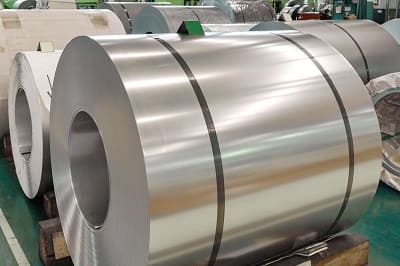
Every steel group with alloy ambitions faces the same question sooner or later. Should it make carbon steel, specialty steel or both? The question sounds technical. In practice it shapes capital budgets, company valuations, workforces and, in a few cases, a country's ability to equip its armed forces. It is usually argued from first principles. This article argues it from the record instead: what steel companies have actually done when faced with the choice, and what happened next.
Executive Summary
On paper, carbon and specialty steel look like natural partners. Both start from scrap or iron ore. Both pass through a melt shop, a caster and a rolling mill. Both sell into automotive, engineering and construction markets. So why do so few large steel groups run both businesses for long?
This article traces roughly thirty ownership changes across nine countries and five decades. They include spin-offs, trade sales, bankruptcies and nationalisations. The pattern is clear and largely one-way. Carbon steel majors divest specialty businesses about three times as often as they acquire them. Once a specialty business leaves its carbon steel parent, it almost never returns. Only one clean reversal appears in the whole dataset.
The most important exception is not commercial. Where specialty output touches national defence, such as armour plate, ordnance steel and aerospace alloys, governments are willing to override the market. Poland offers two clear examples, one reactive and one pre-emptive. The line between commodity-like specialty steel and the small, genuinely strategic part of the industry runs through everything that follows.
The analysis moves in a simple sequence. It first sets out the case for and against combination, stage by stage through the process route. It then tests that case against the global ownership record. Next it asks whether divestment sticks, and where the state steps in. It closes with the three factors that decide the outcome and what they mean for owners and governments.
The Case For and Against Combination
The case for keeping carbon and specialty steel together rests on three arguments. First, shared infrastructure, such as scrap yards, energy contracts and distribution networks, spreads fixed costs over more tonnes. Second, specialty margins are less exposed to the commodity cycle, so they can smooth group earnings. Third, some customers, chiefly in automotive, buy both commodity and higher-specification steel. A single supplier relationship can serve both needs.
The case for separation is stronger. Chemistry, equipment and customer approval processes differ sharply between the two businesses. Volumes differ too. A specialty melt shop may make many small heats across dozens of grades. A carbon steel plant earns its return on long runs of a narrow product range. Investors also tend to reward focus. Parent groups that have listed their specialty arms separately have generally argued that the new company would be better understood, and better valued, on its own.
Where the Two Processes Actually Diverge
The technical case is best seen stage by stage, from melting to rolling, through each item of steel plant equipment. Each stage has its own source of friction between carbon and specialty production, as the table below shows.
| Stage | Problem | Underlying Cause |
|---|---|---|
| Melting | Chromium and nickel carryover | Residual alloy in refractory, slag and scrap contaminates the next heat unless furnaces are dedicated or "buffer" heats are run between campaigns |
| Melting | Scrap segregation | Stainless-grade scrap must be kept physically separate from carbon and low-alloy scrap in the yard and charging system |
| Melting | Different refining routes | Stainless typically requires AOD or VOD vessels to remove carbon without oxidising chromium; carbon steel does not |
| Casting | Mould flux mismatch | Flux composition must match each grade's shrinkage behaviour; a combined caster must fully change flux systems between campaigns |
| Casting | Casting-speed limits | Alloy and stainless grades tolerate lower casting speeds than plain carbon steel before surface cracking risk rises |
| Casting | Peritectic and phase-transformation cracking | Medium-carbon and austenitic stainless grades each need distinct secondary-cooling profiles to avoid centre-line and surface cracks |
| Rolling (flat) | Incompatible mill technology | Flat stainless strip needs Sendzimir or cluster mills; standard carbon hot-strip and cold-reduction mills cannot substitute |
| Rolling (long/bar) | Roll wear and surface transfer | Harder, faster work-hardening stainless and tool steel can smear onto roll surfaces, contaminating the next carbon steel campaign |
| Rolling (long/bar) | Reduction schedule mismatch | Alloy grades need different roll-gap reductions and reheat temperatures even where the same physical stands can be used |
| Rolling (all) | Traceability and certification | Aerospace, medical and automotive customers require documented single-material campaign history, discouraging mixed production |
Source: SteelOnTheNet analysis. Data as of October 2026.
The table points to a simple conclusion. Running both products through one set of plant is possible, but it costs time, yield and certainty. Buffer heats, flux changes and roll changes all eat into capacity. For a specialty customer, any doubt about a campaign's history can be enough to lose a hard-won approval.
The Global Evidence: A Divestment Record
If the technical case for separation is strong, the ownership record should show it. It does, and on every continent examined. Western Europe alone accounts for a dense sequence of divestments. ArcelorMittal spun off its stainless and specialty business as Aperam in January 2011. ThyssenKrupp merged its Inoxum stainless division into Outokumpu the following year. It later sold Acciai Speciali Terni (AST) to Arvedi in 2022. Sandvik separated its materials technology arm as Alleima in the same year. Earlier, Usinor sold its special long products business, Ascometal, to Lucchini in 1999. It sold its electrical steel unit (UGO) to ThyssenKrupp in 2000, as it refocused on flat carbon steel.
North America shows the same direction of travel, but by a rougher route. In 1989 LTV Steel sold its bar division to an employee buyout, forming Republic Engineered Steels. That business later shed its own specialty division under private equity ownership in 1998. Quanex sold its MacSteel special bar quality (SBQ) business to Gerdau in 2008. The Timken Company spun off TimkenSteel in 2014; the business, since renamed Metallus, has been acquired by Japan's Daido Steel. European divestments tend to come through stock market listings. American ones run more often through bankruptcy, employee buyouts or private equity.
The Nordic and Japanese cases connect the two regions in an instructive loop. In 2005 SKF's Ovako special steel division was merged with the engineering steel units of Rautaruukki and Wärtsilä. The combined business was sold outright the following year. It then passed through several private equity owners before Sanyo Special Steel, part of Nippon Steel, bought it in 2018. Nippon Steel itself placed its stainless business in a dedicated subsidiary in 2003. It later folded a rival's stainless arm into that subsidiary, in 2018–19. Then, in 2025, it merged the whole business back into the parent. This is the one clean reversal in the dataset, and is discussed below.
Central and Eastern Europe and China add a further layer. Poland's Huta Warszawa passed from state ownership into a joint venture with Italy's Lucchini Group in 1992, and later to Arcelor. Slovenia's Metal Ravne and Acroni emerged from the break-up of a Yugoslav state combine in 1991–92. China runs in the opposite direction from almost everything else here. Baowu has spent a decade consolidating stainless and carbon capacity under state ownership, absorbing Wuhan, Sinosteel and Maanshan. In August 2020 it took a 51% stake in Taiyuan Iron and Steel Group (TISCO), one of the world's largest stainless producers.1
| Date | Parent | Entity Divested or Separated | Specialty Orientation |
|---|---|---|---|
| 1989 | LTV Steel | Republic Engineered Steels, ESOP | SBQ and specialty bar |
| 1992–2001 | British Steel Corporation | Avesta Sheffield → Outokumpu | Stainless |
| 1999 | Usinor | Ascometal → Lucchini | Special long products |
| 2005–06 | SKF, Rautaruukki, Wärtsilä | Ovako (joint sale) | SBQ engineering steel |
| 2011 | ArcelorMittal | Aperam | Stainless and specialty |
| 2011 | Arcelor / Nippon Steel | Thainox → POSCO | Stainless |
| 2012 | ThyssenKrupp | Inoxum → Outokumpu | Stainless |
| 2014 | Timken Company | TimkenSteel → Metallus → Daido Steel | SBQ alloy steel |
| 2016 | Gerdau | Sidenor (sold back to management) | Special/alloy long steel |
| 2017 | Tata Steel UK | Speciality Steels business (trade sale) | Aerospace and defence alloys |
| 2022 | thyssenkrupp | AST Terni → Arvedi | Stainless flat products |
| 2022 | Sandvik | Alleima | Stainless and special alloys |
| 2023 | Hitachi, Ltd. | Hitachi Metals → Proterial (Bain Capital)3 | Specialty steel and functional materials |
| 2025 | Nippon Steel | NSSC merged back into parent | Stainless (sole reversal in dataset) |
Source: SteelOnTheNet research. Data as of October 2026.
Read as a whole, the table shows direction, not just volume. Specialty assets flow out of carbon steel groups. They rarely flow back in.
Where Combination Does Work
The few cases where combination has lasted are telling. A small number of sites show that it can succeed where assets really are shared. ArcelorMittal Warszawa rolls carbon and alloy long products at a single Polish works. Kobe Steel has run wire rod, bar and sheet alongside special steel within one materials business for decades, without ever seriously separating them. These are exceptions that confirm the rule. They persist because the equipment genuinely is shared, or because the parent is diversified enough that the carbon/specialty choice never becomes a stand-alone decision. Kobe Steel's steel business, for example, sits alongside aluminium, copper, welding and machinery.
Does Divestment Stick?
The strongest finding in this dataset is that separation, once it happens, is close to permanent. Assets such as Ascometal and Ovako have changed hands several times since their original divestment. Neither has rejoined an integrated carbon steel group. What changes is the specialty owner, not the direction of travel. Divested assets move towards other specialty consolidators: Ovako to Nippon Steel's specialty arm, AST to Arvedi, MacSteel into Gerdau's existing SBQ platform, Thainox to POSCO. Almost none return to a diversified carbon steel major.
Nippon Steel's twenty-two year cycle with its stainless business is the sole clean exception. It needed a specific mix of pressures: Japanese domestic overcapacity and the rising capital cost of decarbonisation. The original split had also been largely organisational rather than physical, so there was less to put back together. Gerdau's decade with Sidenor is a partial parallel. Gerdau bought into the Spanish special steel producer in stages from 2006 and sold it back to Sidenor's own management in 2016. This is not a reversal in the Nippon Steel sense. It does show that even a top-tier carbon steel major can try specialty ownership, decide it does not fit and unwind the position.
The reason divestment sticks is practical. After separation, a specialty business builds its own systems, customer approvals and management culture. A carbon steel parent buying it back would have to rebuild links the divestment had cut, with little shared plant to justify the effort. The door, in other words, swings one way.
The Strategic Exception: When the State Overrides the Market
Almost everything traced so far runs on ordinary commercial logic. Boards decide that focus creates value, or that financial distress forces a sale, sometimes after years of state-supported delay. A small number of cases break that pattern entirely. They cluster around one theme: national defence.
Poland supplies two clear examples. Huta Częstochowa is Poland's largest heavy plate producer and its only domestic source of hardened thick-gauge armour plate. After a period of financial distress under its former private owner, the plant entered bankruptcy proceedings. Rather than allow an open auction, the Polish government designated it a strategic enterprise. In March 2025 the Ministry of National Defence used a first-refusal right under bankruptcy law to buy the plant outright. It was the first time the mechanism had been used. The purchase completed in December 2025.2
Huta Stalowa Wola shows the same logic applied in advance rather than in response to a crisis. In 2012 the group sold its commercially exposed civilian construction machinery division. The aim was to concentrate capital on its steel and defence manufacturing core. In 2014 that core was folded into the state-owned armaments holding Polska Grupa Zbrojeniowa (PGZ).
These cases matter because they show where the "divest for focus" logic does not apply. A small, genuinely strategic slice of specialty steelmaking, covering armour plate, ordnance steel and aerospace and defence alloys, does not behave like the rest of the industry. SteelOnTheNet's 1% Rule puts that slice at around 1% of global output. Within it, governments have shown they will intervene directly when they judge that the market cannot keep capacity in reliable hands.
What Determines the Outcome
Taken together, the evidence points to three factors. They predict how the carbon/specialty question gets resolved more reliably than industry economics alone.
Genuine technical overlap. Where melt shop chemistry, casting settings and rolling equipment are truly distinct, as in most cases here, divestment tends to be clean and lasting. Where a site or process is genuinely shared, as at ArcelorMittal Warszawa or within Kobe Steel's materials business, combination persists.
Access to capital markets. Listed companies with deep equity markets resolve the tension through spin-offs, rewarded by investors who value focused businesses. Aperam, Alleima and TimkenSteel are examples. Firms without that access, or in financial distress, resolve it through bankruptcy and break-up instead. This route is messier, but the separation is just as permanent. State-directed economies show a third pattern that runs the other way: China's Baowu has spent a decade consolidating rather than divesting.
Strategic status. Where specialty output falls within the genuinely strategic part of the industry, ordinary market logic is set aside. Poland has shown this both after a failure, at Huta Częstochowa, and before one, at Huta Stalowa Wola.
Implications for Owners and Policymakers
The record carries practical lessons for three groups.
Boards of integrated steel groups. Before buying or keeping a specialty business, test the overlap honestly. Ask which assets are truly shared, not merely on the same site. If the answer is little beyond a perimeter fence and a head office, the record is clear. The business will probably be worth more, and run better, under a specialist owner.
Buyers and investors. Divested specialty assets tend to move between specialist owners. Their value depends on customer approvals, metallurgical know-how and a stable order book far more than on tonnes of capacity. Due diligence should focus there. Frequent changes of owner can wear away approvals and skills, even when the plant itself remains sound.
Governments. The Polish cases show that the state can act decisively when defence supply is at stake, though government ownership of steel companies has a mixed record. The lesson is to act narrowly. Strategic designation is justified for the small share of output that defence and critical supply chains truly depend on. Extending it to commodity-like specialty grades risks tying public money to assets the market has already judged better run elsewhere.
Conclusion
Five decades of evidence give a clear verdict. For a producer of any real scale, carbon and specialty steelmaking are better run apart than together. Once separated, they tend to stay apart. Divestments outnumber acquisitions by roughly three to one, and only one clean reversal appears in the record. That imbalance is not a quirk of sampling. It reflects real technical differences at every stage from melting to rolling. Divestment usually just formalises a separation the shop floor had already made sensible, which is why it is so rarely reversed.
Two further findings follow. First, ownership structure and access to capital shape how separation happens as much as industrial logic does. Spin-offs dominate where equity markets are deep, bankruptcies where they are not and consolidation where the state directs. Second, a small, strategically essential part of the industry plays by different rules. Where specialty output touches defence, governments will step in rather than wait for the market.
The message for owners and governments is simple. Combining carbon and specialty steel is the exception, not the rule. Boards should treat divestment as a one-way door and plan on that basis. Governments should reserve direct intervention for the few assets that defence genuinely depends on, and let the market settle the rest.
SteelOnTheNet
4 October 2026
Sources and Notes:
1. S&P Global Commodity Insights (2020). 'China's Baowu buys stake in TISCO, making a steel giant even larger'. Reports Baowu's acquisition of a 51% stake in Taiyuan Iron & Steel worth approximately US$2.1bn, taking combined crude steel capacity to 111 million tonnes per year. Available at: https://www.spglobal.com/commodity-insights/en/news-research/latest-news/metals/082120-chinas-baowu-buys-stake-in-tisco-making-a-steel-giant-even-larger.
2. GMK Center (2025). 'Polish Ministry of Defense officially takes control of Huta Częstochowa'. Confirms completion of the Polish Ministry of National Defence's acquisition of Huta Częstochowa for PLN 253.8 million under the first-refusal provisions of Poland's bankruptcy law, and the plant's role as Poland's sole domestic producer of hardened thick armour plate. Available at: https://gmk.center/en/news/polish-ministry-of-defense-officially-takes-control-of-huta-czestochowa/.
3. Bain Capital (2022). 'Bain Capital-Led Consortium Announces Successful Close of Tender Offer for Hitachi Metals' Common Shares'. Confirms the consortium's acquisition of Hitachi Metals, subsequently renamed Proterial, as the second-largest private equity investment in Japanese corporate history. Available at: https://www.baincapital.com/news/bain-capital-led-consortium-announces-successful-close-tender-offer-hitachi-metals-common.
4. World Steel Association (2024). Steel Statistical Yearbook 2024. Brussels: worldsteel. Production and capacity data referenced throughout. Available at: https://worldsteel.org/steel-by-topic/statistics.

Dr Andrzej M Kotas (FIMMM FIC) is Founder and CEO of SteelOnTheNet and Managing Director of Metals Consulting International. He has over 30 years of experience advising governments, development banks and industry on steel sector strategy, technology transition and investment decisions.
View full credentials →Facing this on a live project? Our Valuation Service → Discuss a Project →
How to Cite This Article
Kotas, A.M. (2026) 'The One-Way Door: Why Carbon Steelmakers Divest Specialty Steel', SteelOnTheNet. Available at: https://doi.org/10.5281/zenodo.23142731 (Accessed: 27 October 2026).
Author credentials:  ORCID iD