Germany Steel Profile & Overview
Germany is Europe's largest steel producer and the world's seventh-largest, yet its industry has entered a phase of deep structural crisis. Output has fallen sharply from post-pandemic levels, cost competitiveness has been severely eroded by high energy prices following the post-2022 gas supply disruption, and the two largest integrated producers – thyssenkrupp Steel and Salzgitter – face the most consequential capital investment decision in a generation: whether, when and how to transition their blast furnace complexes to low-carbon DRI–EAF routes.
Against this, Chinese export pressure is intensifying, the EU's CBAM is reshaping trade economics, and Germany's automotive sector – the steel industry's most important customer – is itself in structural transition. This page provides an independent overview of Germany's steel industry, covering facilities, logistics, scrap flows, ownership, resources, distribution and the structural issues that will define its trajectory.
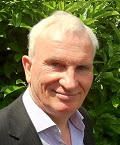
Analysis by Dr Andrzej M Kotas, independent steel industry advisor with over 30 years of steel sector experience across 48 countries.
Overview of the German Steel Industry
Role of Steel in the German Economy
Steel is foundational to Germany's industrial identity and to its most important export sectors – automotive, mechanical engineering, construction equipment and energy infrastructure. Germany's steel industry generates direct revenues of approximately €35–40bn per year and supports around 85,000 direct jobs, with a much larger indirect employment base across processing, fabrication and consuming industries.[1]
The sector's relationship with the automotive industry is the defining commercial axis: Germany's three domestic OEMs (Volkswagen Group, Mercedes-Benz and BMW) plus Tier-1 suppliers are collectively the single largest customer group for flat steel, particularly cold-rolled, galvanised and advanced high-strength steel grades. The structural transition of the automotive sector towards BEVs – combined with the entry of low-cost Chinese competition – creates significant demand-side uncertainty for the German steel industry over the 2025–2035 period. The industry body Wirtschaftsvereinigung Stahl (WV Stahl) is the principal sector representative, equivalent to UK Steel in the UK or the American Iron and Steel Institute in the USA.
Production Output & Structure
Germany produced approximately 37 Mt of crude steel in 2024, down from a post-pandemic peak of ~35.5 Mt in 2021 and well below pre-2015 levels that regularly exceeded 40 Mt/yr. The ranking as the world's seventh-largest producer has been maintained, but Germany's share of global output has declined steadily as Chinese production has grown and as Indian and Turkish output has expanded.[2]
The production mix remains dominated by the BF–BOF integrated route (~70% of output), primarily at the large coastal and Rhine-adjacent works of thyssenkrupp Steel (Duisburg) and ArcelorMittal (Bremen, Hamburg, Eisenhüttenstadt). The EAF route accounts for the remaining ~30%, principally at Salzgitter (partially EAF), Saarstahl/Dillinger (via DRI pilot work) and a number of specialist long-products and stainless producers. Germany has no significant induction furnace sector; its secondary steelmaking is predominantly high-grade EAF output for engineering and special steel applications.
Steel Market
Consumption & Per Capita Demand
Germany's apparent steel consumption was approximately 26 Mt in 2024, reflecting both a cyclical downturn and structural demand headwinds from the weakness in automotive production and construction. Per capita consumption was approximately 313 kg/yr – substantially above the global average of ~215 kg but well below South Korea (~924 kg) or Taiwan (~746 kg) which have export-oriented steel processing sectors.[2] Consumption peaked at around 35.5 Mt in 2021 and has declined in each subsequent year, making Germany one of the few major economies where steel demand fell faster than output – producing a structural trade surplus in steel that was historically unusual for Germany.
Steel Trade
Germany is a significant net exporter of steel – one of the few among large producing nations. Exports totalled approximately 7.0 Mt in 2024 against imports of ~4.3 Mt, yielding a net export position of ~2.7 Mt.[3] The majority of exports are flat products destined for other EU member states and for export-processed engineering goods. Germany is simultaneously a major importer of semi-finished steel and specialist long products. The EU CBAM, phased in from 2026, will directly affect both the cost of German steel exports to non-EU markets and the pricing of imported steel into Germany.
Main Plants & Facilities
Germany's steelmaking base is concentrated in the Ruhr Valley (North Rhine-Westphalia), the Saar region, coastal locations at Bremen and Hamburg, and the Brandenburg site at Eisenhüttenstadt. Duisburg is the dominant single location, hosting the largest integrated steel complex in Western Europe at thyssenkrupp Steel's Bruckhausen, Schwelgern and Beeckerwerth sites.
| Plant | Location | Process | Capacity (Mt/yr) | Main Products | Owner |
|---|---|---|---|---|---|
| DuisburgBruckhausen, Schwelgern and Beeckerwerth sites; largest integrated steelworks in Western Europe; four blast furnaces on two adjacent sites | North Rhine-Westphalia | BF–BOF | ~11.0 | HRC, cold rolled, galvanised, heavy plate, electrical steel | thyssenkrupp Steel |
| SalzgitterIntegrated works; first commercial DRI–EAF transition in Germany underway | Lower Saxony | BF–BOF / DRI–EAF (transition) | ~5.5 | HRC, cold rolled, heavy plate, sections, tubes | Salzgitter AG |
| BremenCoastal integrated works; significant HRC and coated products capacity | Bremen | BF–BOF | ~3.5 | HRC, cold rolled, galvanised, tinplate | ArcelorMittal |
| EisenhüttenstadtFormer East German integrated works; flat products specialist | Brandenburg | BF–BOF | ~2.5 | HRC, cold rolled, galvanised | ArcelorMittal |
| Hamburg (Hamburger Stahlwerke)Large EAF long products works; scrap-based | Hamburg | EAF | ~1.5 | Wire rod, rebar | ArcelorMittal |
| Völklingen / Dillingen (Saarstahl / Dillinger)Long products and heavy plate; DRI pilot project (SALCOS concept) underway | Saarland | BF–BOF / EAF | ~4.5 | Heavy plate, sections, wire rod, special steels | SHS – Stahl-Holding-Saar (Dillinger / Saarstahl) |
| GeorgsmarienhütteEAF special steel producer; engineering and tool steel focus | Lower Saxony | EAF | ~0.9 | Special bar quality, engineering steel, rails | Georgsmarienhütte GmbH |
| Witten / Krefeld (Deutsche Edelstahlwerke)Stainless and special alloy steels; serves aerospace and medical sectors | North Rhine-Westphalia | EAF | ~0.7 | Stainless, special alloy, tool steel | Schmolz + Bickenbach (Deutsche Edelstahlwerke) |
Capacities are nominal crude steel or liquid steel equivalent; actual output may be lower given current market conditions. Smaller EAF plants, re-rollers and downstream processors are not listed. Sources: WV Stahl, company reports, Global Energy Monitor. Data as of Q1 2026. For full plant-level data see our Steel Plant Capacity Database.
Planned Investments
Germany's steel investment landscape is dominated by the question of DRI–EAF transition – replacing coal-fired blast furnaces with hydrogen-capable DRI plants and electric arc furnaces. This transformation is technically demanding, capital-intensive (estimates range from €1–3bn per integrated site) and dependent on the availability of affordable low-carbon hydrogen and competitive green electricity. Federal and state government subsidies are central to the business case for all announced projects – for analysis of European state aid frameworks as they apply to steel, see our State Aid & Steel page.[4]
thyssenkrupp Steel – tkH₂Steel / Direct Reduced Iron
Investor: thyssenkrupp Steel Europe | Scale: Phased DRI–EAF replacement of BF capacity at Duisburg
Status: The first DRI plant (1.25 Mt/yr) at Duisburg, branded tkH₂Steel, received federal funding approval in 2023 and is under construction, targeting commissioning in 2027. It will initially operate on natural gas with hydrogen capability. Subsequent phases would expand DRI capacity and retire blast furnaces incrementally. Corporate ownership turbulence has introduced significant uncertainty into the investment timeline: EP Corporate Group acquired a 20% stake in 2024 but returned it in September 2025 after JV negotiations failed, and as of early 2026 Jindal Steel International has made a non-binding indicative offer for the business.[5]
Salzgitter – SALCOS Programme
Investor: Salzgitter AG | Scale: Full transition of Salzgitter works to DRI–EAF by ~2033
Status: SALCOS (Salzgitter Low CO₂ Steelmaking) is Germany's most advanced green steel transition programme. Phase 1 (a 1.9 Mt/yr DRI–EAF unit to replace one blast furnace) is under active development with federal and state funding confirmed. The full programme targets 95% CO₂ reduction. Salzgitter is also a partner in the Hamburg Green Hydrogen Hub (H2G2) for on-site green hydrogen supply.[6]
SHS / Dillinger–Saarstahl – ROGESA DRI
Investor: SHS – Stahl-Holding-Saar | Scale: DRI–EAF transition for Saarland integrated works
Status: The shared blast furnace company ROGESA is exploring DRI–EAF conversion. A feasibility study for a DRI plant at Dillingen/Völklingen has received Saarland state support. The timeline is less advanced than tkSteel or Salzgitter; the Saar works face additional headwinds from their long-products mix and weaker structural steel market conditions.
ArcelorMittal Germany – Decarbonisation Plans
Investor: ArcelorMittal | Scale: DRI–EAF transition at Bremen; EAF upgrade at Hamburg
Status: ArcelorMittal has announced hydrogen-based DRI plans for its Bremen integrated works. However, the group's Germany-specific investment pace has been cautious relative to its France (Dunkirk) or Spain (Sestao/Gijón) commitments. Hamburg Hamburger Stahlwerke is already EAF-based and is being considered for expanded scrap and DRI capacity.[7]
Capacity Rationalisation
Alongside green investment, Germany's steel industry is undergoing significant capacity rationalisation. thyssenkrupp Steel announced plans in 2024 to reduce steelmaking capacity at Duisburg from ~11 Mt/yr to approximately 8–9 Mt/yr, involving the closure or idling of individual blast furnace lines, and a workforce reduction of approximately 11,000 across the steel division. Salzgitter and Dillinger have also operated some capacity at reduced rates due to weak market conditions and energy cost pressure.
OngoingRationalisationWorkforce reductionLogistics & Ports
Germany's steel logistics benefit from excellent infrastructure – the Rhine and Ruhr river systems provide low-cost bulk cargo routes connecting the Ruhr steelworks to North Sea ports; rail connections to all major plants are well-established; and the autobahn network supports finished product distribution. The Ruhr Valley's position in the centre of the European steel market – equidistant from North Sea ports and Central European consuming regions – is a structural geographic advantage.
Europe's largest inland port and the logistics hub for the Ruhr steelmaking complex. Handles coking coal and iron ore barge traffic from Rotterdam and the North Sea ports directly to steelworks quays. thyssenkrupp Steel's integrated works at Bruckhausen and Schwelgern have captive port facilities on the Rhine and Rhine-Herne Canal. DRI feedstock imports (iron ore pellets or HBI) will increasingly use this corridor as the transition proceeds.
Although located in the Netherlands, Rotterdam is the primary ocean gateway for German steel raw material imports – coking coal, iron ore and scrap – arriving by Capesize and Panamax vessels and then transhipped by Rhine barge to German steelworks. Rotterdam's Maasvlakte 2 bulk terminals handle very large ore and coal vessels. The port's importance to German steel logistics makes it a strategic dependency.
The ArcelorMittal Bremen works sits directly on the Weser with a captive quay capable of handling Capesize bulk vessels – a significant logistics advantage for iron ore and coking coal imports. Bremen's port also handles steel coil and finished product exports to Northern European markets. Bremerhaven, downstream, handles container traffic and ro-ro steel product exports.
Germany's largest seaport handles scrap imports for ArcelorMittal's Hamburg Hamburger Stahlwerke EAF operation, as well as finished steel exports and steel product imports. Hamburg is also being considered as a green hydrogen import terminal (via ammonia or liquid H₂) to supply future DRI operations in Northern Germany, with the Hamburg Green Hydrogen Hub project targeting the Salzgitter and ArcelorMittal supply chain.
The Saar works rely on the Saar–Moselle–Rhine inland waterway system for bulk commodity access, with connections to the Rhine via Koblenz. Road and rail complete the logistics mix. The Saar's location – further from North Sea ports than the Ruhr – adds a freight cost premium relative to the Duisburg complex, a structural factor in ongoing competitiveness discussions.
Ownership Structure

German steel ownership spans domestic conglomerates, state-linked holding companies, global multinationals and private equity interests. Unlike India (where the state owns a major integrated producer directly) or China (where most capacity is state-owned), Germany's steel sector has been predominantly private since the Krupp and Thyssen privatisations of the postwar decades.
However, the current energy and decarbonisation crisis has drawn state actors back in through subsidy frameworks. The ownership of thyssenkrupp Steel Europe – Germany's largest producer – remains actively unresolved: EP Corporate Group (Czech energy magnate Daniel Křetínský's vehicle) acquired a 20% stake in 2024, but returned it in September 2025 after JV negotiations collapsed.
As of early 2026, Jindal Steel International (India) has submitted a non-binding indicative offer for the business, which thyssenkrupp AG is reviewing.
Overseas & Cross-Border Operations
Two distinct concepts apply throughout this page: installed-in-country capacity (all steelmaking located within Germany, regardless of who owns it) and nationally-owned capacity (steelmaking owned by German producers, wherever located in the world). The table below summarises significant cross-border ownership interests that bridge the two concepts.
| Producer | Overseas Entity | Location | Scale / Stake | Notes |
|---|---|---|---|---|
| ArcelorMittal | ArcelorMittal Germany (Bremen, Eisenhüttenstadt, Hamburg) | Germany | ~7.5 Mt/yr combined | Luxembourg-headquartered global producer; Germany is a major country of operation, not a domestically-owned producer |
| Salzgitter AG | Mannesmann Tubes (Germany + international) | Germany / Europe | Multiple tube plants across Germany, France, Czech Republic | Downstream processing and tube operations; not primary steelmaking; significant value-added export business |
| EP Corporate Group | thyssenkrupp Steel Europe (20% stake, option to 50%) | Germany (Duisburg) | 20% of ~11 Mt/yr; option to 50% | Czech billionaire Daniel Křetínský's energy group; acquired 20% stake in 2024, returned September 2025 after JV negotiations collapsed; Jindal Steel International (India) has since submitted a non-binding indicative offer for the business |
Source: SteelOnTheNet research. Data as of Q1 2026.
Resources: Raw Materials & Energy
Raw Materials
Germany has no significant domestic iron ore production and essentially no commercially viable coking coal reserves remaining. It is therefore wholly import-dependent for the primary feedstocks of BF–BOF steelmaking. Iron ore arrives principally from Brazil (Vale), Australia (BHP, Rio Tinto, Fortescue) and Mauritania, predominantly through Rotterdam and Bremen. Coking coal is sourced from Australia, the USA and Canada, also through North Sea ports.[8]
The transition to DRI–EAF will substitute these inputs with high-quality iron ore pellets (or HBI/DRI) and – in the longer run – green hydrogen. LKAB (Sweden) and LKAB's parent-supported HYBRIT project are potential pellet suppliers for a future German DRI supply chain; Mauritania's Nimba ore deposit is another candidate. Germany will exchange one raw material import dependency (coking coal) for a different one (pellets and hydrogen), though hydrogen can in principle be produced domestically from renewable electricity.
Energy Supply
Energy is Germany's most acute structural challenge for steel. Industrial electricity prices in Germany consistently rank among the highest in the OECD, a product of the Energiewende (energy transition) levy structure, grid fees and the accelerated nuclear phase-out completed in April 2023. For EAF and DRI–EAF operations, electricity cost is the dominant variable input cost; Germany's energy price disadvantage relative to the USA (where cheap natural gas and shale-era electricity prices prevail), Turkey (where energy costs are lower) or future competitors using cheap renewable hydrogen is a critical competitiveness issue.[9]
Renewable energy capacity is growing rapidly – Germany installed record wind and solar capacity in 2023–24 – but grid constraints, curtailment and the need for dispatchable power for industrial baseload mean that real industrial electricity costs remain elevated. Government industrial electricity price relief (Strompreiskompensation) and direct grid fee reductions for steel producers have been implemented but are contested as state aid under EU rules.
Scrap Supply
Germany has one of the most developed ferrous scrap sectors in the world – a product of its long industrial history, large installed steel-in-use stock and well-organised scrap collection and processing infrastructure. This scrap endowment is a significant strategic asset as the industry transitions toward EAF-based steelmaking: Germany will not face the structural scrap deficit that constrains countries like India. However, Germany is currently a significant net exporter of ferrous scrap – a position that reflects both the current BF-BOF dominance (which does not consume scrap in primary steelmaking) and the price competitiveness of export markets, particularly Turkey.
Collection
Germany generates approximately 17–20 Mt of ferrous scrap annually from automotive, construction, demolition and industrial sources. The collection and processing sector is highly organised, dominated by large processors such as TSR Recycling (a Remondis subsidiary), Scholz Group (now Alba) and numerous regional operators. Germany's scrap quality profile is good – with significant quantities of high-grade obsolete and prompt scrap from the automotive sector.[10]
Exports
Germany exported approximately 7.0 Mt of ferrous scrap in 2024, making it one of the EU's largest scrap exporters.[11] The principal destination is Turkey, which absorbs large volumes of European HMS scrap for its large EAF-based steel sector. Other significant buyers include the Netherlands, Belgium and non-EU markets in the Middle East and Asia. Export volumes are sensitive to the Turkey–Germany price spread and to EU trade policy on scrap exports.
Imports
Germany's scrap imports are relatively modest (~3–4 Mt/yr) and consist mainly of intra-EU flows and some specialist grades. The EU's CBAM and evolving discussions on restricting ferrous scrap exports from the EU – driven by France, Italy and Spain seeking to retain scrap for domestic decarbonisation – could reduce Germany's export capacity and increase domestic availability, which would support EAF economics during the green transition.
Future Trajectory
As Germany's steelmaking base transitions from BF–BOF to DRI–EAF, domestic scrap consumption will rise substantially. DRI–EAF operations typically blend 20–30% scrap with DRI, and purely scrap-based EAF operations could absorb the majority of domestic generation. Germany's existing scrap endowment positions it well for this transition – but policy changes on export restrictions, EU scrap taxonomy and carbon pricing will shape how this plays out in practice.[4]
Scrap Policy & EU Context
EU Scrap Export Restrictions
The European Commission has been under pressure from several member states – particularly France and Italy – to restrict ferrous scrap exports from the EU to prioritise domestic availability for the green steel transition. Germany has historically resisted such measures, citing free trade principles and the interests of its scrap processing sector. The outcome of this EU-level debate will materially affect German scrap export economics and the competitiveness of the Turkish and non-EU scrap market over the 2025–2030 period.
Policy riskEU debate ongoingAutomotive Scrap Pipeline
Germany's large vehicle fleet – approximately 49 million registered passenger cars – represents a significant future scrap generation pipeline. End-of-life vehicles typically yield approximately 0.6–0.7 tonnes of ferrous scrap per vehicle. As the fleet ages and the shift to electric vehicles accelerates vehicle replacement cycles, this pipeline is expected to maintain Germany's scrap generation at high levels through the 2030s, providing a structurally sound feedstock base for expanded EAF capacity.
Long-term supplyEV transition driverSteel Distribution
Steel distribution in Germany is highly organised, reflecting the country's sophisticated manufacturing sector and its role as Europe's largest steel-consuming market. Unlike India's fragmented multi-tier distribution system, German steel distribution is dominated by large service centre groups and direct supply relationships between mills and major industrial customers – particularly in the automotive sector where just-in-time supply chains are the norm.
Klöckner & Co
Germany's (and one of Europe's) largest independent steel and metals distributor, headquartered in Duisburg. Klöckner operates a network of service centres across Germany, the USA and Europe, sourcing from multiple mills and processing flat and long products for delivery to a wide range of industrial customers. Klöckner has invested heavily in digital distribution platforms (kloeckner.i / XOM Metals) and is a leader in the steel sector's digital transformation.
In January 2026, US steel service centre group Worthington Steel announced a US$2.4bn all-cash takeover offer for Klöckner at €11 per share. By late March 2026, Worthington had secured approximately 58.8% of Klöckner's share capital – exceeding the revised minimum acceptance threshold – and initiated steps toward a domination and profit transfer agreement (BGAV). Full completion is anticipated in H2 2026. The acquisition underscores the ongoing consolidation of steel distribution across North America and Europe. For further context see our Distributor Acquisitions tracker.
Listed distributorPan-EuropeanAcquisition pending – Worthington SteelService Centre Groups
A dense network of steel service centres operates across Germany's industrial regions – the Ruhr, Rhine-Main, Bavaria, Baden-Württemberg and Hamburg-Bremen. Major groups include Voestalpine Steel Service Center (Austrian-owned), Metals distributor Stahl-Service-Center-Institut (SSCI) members and numerous Mittelstand processors. Service centres add value through slitting, cutting, levelling, tempering and coating, and are critical intermediaries between mills and manufacturing customers. German steelmakers also extend their distribution reach overseas: thyssenkrupp Materials Services operates thyssenkrupp Materials Poland, a leading Polish distributor of metal and plastic products – illustrating how major German groups use distribution subsidiaries to serve Central European manufacturing markets directly.
Mittelstand ecosystemValue-added processingCross-border distributionDirect Mill Supply – Automotive
The automotive sector – Volkswagen Group (including Audi, Porsche, SEAT, Skoda), BMW, Mercedes-Benz and their Tier-1 body and stamping suppliers – is served primarily by direct long-term supply contracts with thyssenkrupp Steel, Salzgitter and ArcelorMittal. These contracts specify precise steel grades (advanced high-strength steel, exposed-quality surface grades, press-hardening steels) and quality requirements that the spot and service centre markets cannot readily supply. The automotive relationship drives mill product development and premium pricing.
Direct supplyAutomotive OEMsInfrastructure, construction and mechanical engineering customers are served through a mix of direct contracts (for large volumes of structural sections, plates and heavy bar) and the service centre network. Germany's high-speed rail network (Deutsche Bahn) is a significant consumer of rail steel, primarily sourced domestically from Dillinger/Saarstahl and Georgsmarienhütte. The wind energy sector – a major growth area – creates demand for heavy steel plate (for tower sections, foundations and monopiles), driving investment at Dillinger and Salzgitter's plate mills.
Issues
Germany's industrial electricity prices are among the highest in the developed world – approximately 2–3× the US industrial price and significantly above the EU average for energy-intensive industry. For EAF operations, electricity accounts for 30–40% of operating costs; for future DRI–EAF operations dependent on green hydrogen, energy costs will be even more dominant. The elimination of cheap Russian pipeline gas after 2022 removed the last structural energy cost advantage that German integrated steelmakers had retained.
Government countermeasures – industrial electricity price ceilings, grid fee reductions and Carbon Contracts for Difference – are important but do not fully close the competitiveness gap with lower-cost jurisdictions. This is the single most frequently cited existential threat to Germany's steel industry in the near term.
See also: Steel Production Costs | Steel Industry Challenges: Top 10 Issues
China's structural overcapacity – producing approximately 1,005 Mt/yr against domestic consumption of ~857 Mt – generates a persistent surplus available for export. Germany, as a high-cost producer with relatively open EU trade access and significant flat product capacity, is directly exposed to Chinese HRC and plate imports undercutting domestic pricing. The EU's anti-dumping and anti-subsidy measures provide partial protection, but enforcement lags and circumvention via third countries (Vietnam, Egypt, Turkey) are persistent concerns.
EU safeguard measures (the Steel Safeguard Regulation) impose tariff-rate quotas on 26 steel product categories; their extension and reinforcement is a constant lobbying priority for WV Stahl and Eurofer.
See also: Trump Steel Tariffs: Global Impact Analysis | The Overcapacity Trap
Germany has committed to climate neutrality by 2045 – five years ahead of the EU's 2050 target. The steel industry accounts for approximately 6–7% of Germany's total greenhouse gas emissions. The transition to DRI–EAF is technically feasible but the timeline is aggressive: major DRI projects (tkH₂Steel, SALCOS) are targeting first production in 2027–2029, but full BF replacement across the sector is unlikely before the late 2030s at the earliest.[9]
Green hydrogen availability at competitive prices is the critical path constraint: current German hydrogen production and import infrastructure is insufficient for industrial-scale DRI, and the Hydrogen Import Strategy (targeting large-scale imports from Norway, North Africa and Canada) will take years to fully materialise.
See also: Trillion Dollar Hydrogen Infrastructure for Steel | What If Steel Stays Dirty? | Green Steel & Decarbonisation
The EU's Carbon Border Adjustment Mechanism – applying carbon pricing to imported steel and other products from 2026, with full implementation by 2034 – is potentially Germany's most powerful policy lever for levelling the carbon cost playing field. It imposes a carbon cost on imported steel proportional to its embedded emissions, protecting high-cost German producers from competitors in countries without equivalent carbon pricing.
However, CBAM simultaneously creates market disruption risks: non-EU producers may divert cheap, high-carbon steel away from the EU to markets without CBAM (the Americas, Asia), further depressing those markets and creating secondary competitive pressures. CBAM also does not address Germany's energy cost disadvantage – it addresses carbon costs specifically.
See also: Two Worlds: Carbon Pricing Splits the Steel Industry | EU Steel Action Plan 2025
The shift from internal combustion engine (ICE) vehicles to battery electric vehicles (BEV) affects Germany's steel demand in complex ways. BEVs use broadly similar amounts of steel to ICE vehicles, but the mix changes: there is less demand for certain precision-engineered powertrain components (which use special and engineering steels) and more demand for battery enclosures, motor housings and structural reinforcements. German EV production has grown but lagged Chinese competition, creating demand uncertainty for the steel sector's most important customer group.
The weakness of VW, BMW and Mercedes-Benz in China (their historically most profitable export market) creates a structural demand risk for German steel that is independent of the decarbonisation debate.
See also: Flat-Rolled Steel Products | Steel End-Use Applications | Specialty Steels & Alloy Grades
The combination of weak demand, high energy costs and the capital requirements of the green transition has forced capacity reductions across the sector. thyssenkrupp Steel's announcement of 11,000 job losses and approximately 2–3 Mt/yr of capacity closure at Duisburg was the most high-profile instance in 2024, but Saarstahl, Dillinger and several smaller producers have also implemented or announced short-time working and closures.[5]
The social and political implications are acute in North Rhine-Westphalia and the Saar – historically steel and mining regions where IG Metall (the metalworkers' union) maintains strong representation and where steel employment has iconic political significance. The balance between necessary restructuring and social protection is a live political issue in German industrial policy.
See also: Zombie Steel Mills: Why State Aid Delays the Inevitable | Global Steel Capacity
The question of who owns and controls thyssenkrupp Steel Europe has been one of the most persistent unresolved issues in the European steel sector for over a decade. The parent, thyssenkrupp AG, has repeatedly signalled its desire to separate the steel division – through a standalone IPO, a joint venture or an outright sale – yet each attempt has encountered commercial, political or structural obstacles.
The most recent episode illustrated the difficulty vividly. In April 2024, Czech energy group EP Corporate Group (EPCG) acquired a 20% stake with an agreed path to a 50/50 joint venture. By September 2025, those negotiations had collapsed and EPCG returned its stake, receiving reimbursement of the purchase price. Almost simultaneously, Jindal Steel International (India) submitted a non-binding indicative offer for thyssenkrupp Steel Europe – an approach thyssenkrupp AG confirmed it was reviewing against criteria of economic viability and continuity of the green transformation.
As of early 2026, thyssenkrupp Steel Europe remains 100% owned by thyssenkrupp AG, which has made clear it does not wish to retain the steel business long-term but has yet to identify a credible buyer or structure. The combination of deep restructuring (approximately 11,000 job cuts announced in 2024), a €1bn+ tkH₂Steel DRI project under construction and unresolved ownership creates a uniquely complex strategic environment – with significant uncertainty for the workforce, customers and supply chain partners alike.
See also: Steel Industry M&A Trend Analysis | Zombie Steel Mills: Why State Aid Delays the Inevitable
Sources & Further Reading
Authoritative sources underpinning the data and analysis on this page.
World Steel Association
- World Steel in Figures – annual production & trade data
- Monthly crude steel statistics
- Sustainability indicators
WV Stahl (Wirtschaftsvereinigung Stahl)
- Annual German Steel Statistics
- Policy positions on energy, trade and decarbonisation
- Employment and production data
Eurofer
- European Steel in Figures
- CBAM and trade policy updates
- Green Deal and steelmaking transition analysis
OECD Steel Committee
- Excess Capacity Reports – global overcapacity data
- Steelmaking technology and decarbonisation analysis
SteelOnTheNet
- Plant Capacity Database
- Country Maps
- Company histories: ArcelorMittal
- Latest news: European Steel News, thyssenkrupp Steel, ArcelorMittal
Global Energy Monitor
- Global Steel Plant Tracker – plant-level emissions and status
- Carbon lock-in analysis and DRI transition tracking
SteelOnTheNet Insights
- Do G7 Countries Need Virgin Steelmaking?
- Trillion Dollar Hydrogen Infrastructure for Steel
- EU Steel Action Plan 2025: The Crisis Response
- Two Worlds: Carbon Pricing Splits the Steel Industry
- What If Steel Stays Dirty?
- Zombie Steel Mills: Why State Aid Delays the Inevitable
- Trump Steel Tariffs: Global Impact Analysis
- Steel Industry M&A Trend Analysis
- The Overcapacity Trap: Barriers to Entry and Exit in Steel
References
- WV Stahl — Wirtschaftsvereinigung Stahl (2025): German Steel Statistics 2025 — production, employment, and economic contribution
- World Steel Association (2025): World Steel in Figures 2025 — production, consumption and per capita data
- World Steel Association (2025): Steel Trade Statistics 2024 — German export and import volumes by product
- Federal Ministry for Economic Affairs and Climate Action, Germany (BMWK) (2024): National Hydrogen Strategy and Klimaschutzverträge programme documentation
- thyssenkrupp Steel Europe AG (2024): Annual Report 2023–24 and EP Corporate Group stake announcement, investor communications
- Salzgitter AG (2025): SALCOS — Salzgitter Low CO₂ Steelmaking — programme overview and investment commitments
- ArcelorMittal (2025): Climate Action Report 2025 — decarbonisation roadmap for European operations including Bremen and Eisenhüttenstadt
- Eurofer / WV Stahl (2024): Raw material import dependency analysis for European steelmakers
- International Energy Agency (2024): Iron and Steel Technology Roadmap — decarbonisation pathway analysis including Germany case studies
- Bureau of International Recycling (BIR) (2025): World Steel Recycling in Figures 2025 — German ferrous scrap generation and trade
- World Steel Association (2025): Trade in Ferrous Scrap 2024 — German scrap export volumes and destinations
How to Cite This Page
Kotas, A.M. (2026) 'Germany Steel Industry: Facilities, Resources & Analysis', SteelOnTheNet. Available at: https://www.steelonthenet.com/resources/countries/germany.html (Accessed: 26 October 2026).
Author credentials:  ORCID iD
Germany Steel Advisory Services
Need independent analysis of the German steel market, a feasibility study, due diligence support or expert witness testimony? Our track record spans 48 countries and over 30 years of steel sector experience.